
How to Think About What a Pot Odds Calculation Actually Tells You About a Calling Decision
When a pot already contains money from earlier betting, the ratio of what you risk to what you can win reveals whether calling is mathematically justified.
Gaming Culture and the Odds
Swift Line Gaming covers the odds, the games, and the culture that make gambling worth understanding.
When a pot already contains money from earlier betting, the ratio of what you risk to what you can win reveals whether calling is mathematically justified.

A probability figure describes a long-run pattern across many bets, not a reliable prediction of what happens on any one individual wager.

Side bets sit next to familiar main bets and feel like small additions, but their separate house edge makes them a distinct and often much larger cost.

A run of wins changes your bankroll balance but not the game's odds, and understanding that gap helps you make clearer decisions about what comes next.

When a bet can end in a tie rather than a win or loss, that third outcome quietly reshapes your expected loss in a precise, calculable way.

Deciding in advance how much you are willing to lose changes your session risk profile in ways that pure expected value calculations do not capture.

Covering more outcomes on the same game feels like better odds, but the math shows precisely what you gain and what you pay for it.

When a bet's winning probability is tiny, the expected value formula still works but the gap between your average outcome and your typical experience grows dramatically.

When a winning bet requires two separate conditions to both occur, the combined probability is smaller than either condition alone in a precise, calculable way.

A game's published return-to-player figure describes long-run averages across millions of rounds, not what you should expect in one sitting.

Combining multiple bets into a parlay changes both your probability of winning and your payout in ways that do not always move together.

Changing your bet size on an identical game reshapes the range of outcomes you experience, even though the house edge percentage stays fixed.

When you know a bet has positive expected value, the Kelly Criterion gives you a precise mathematical method for choosing how much to wager.

When a game pays less than true odds on a winning bet, that gap is a hidden per-bet fee you can measure exactly before you play.

Opening lines, closing line value, and ticket-to-handle ratios reveal measurable probability shifts before kickoff.

A long losing streak feels like evidence the game is rigged, but the math explains exactly how often streaks that length should appear by chance.

Playing longer than you intended is not neutral mathematically; each extra round systematically shifts your expected loss and your range of outcomes.

Before you sit down, one calculation can tell you how likely your bankroll is to survive a session at any given game and bet size.

Combining two games with different house edges and volatilities in one session creates a blended risk profile that neither game's numbers alone can predict.

When a game adds a bonus round with different odds and payouts, the expected value of the whole game is not the same as either piece alone.
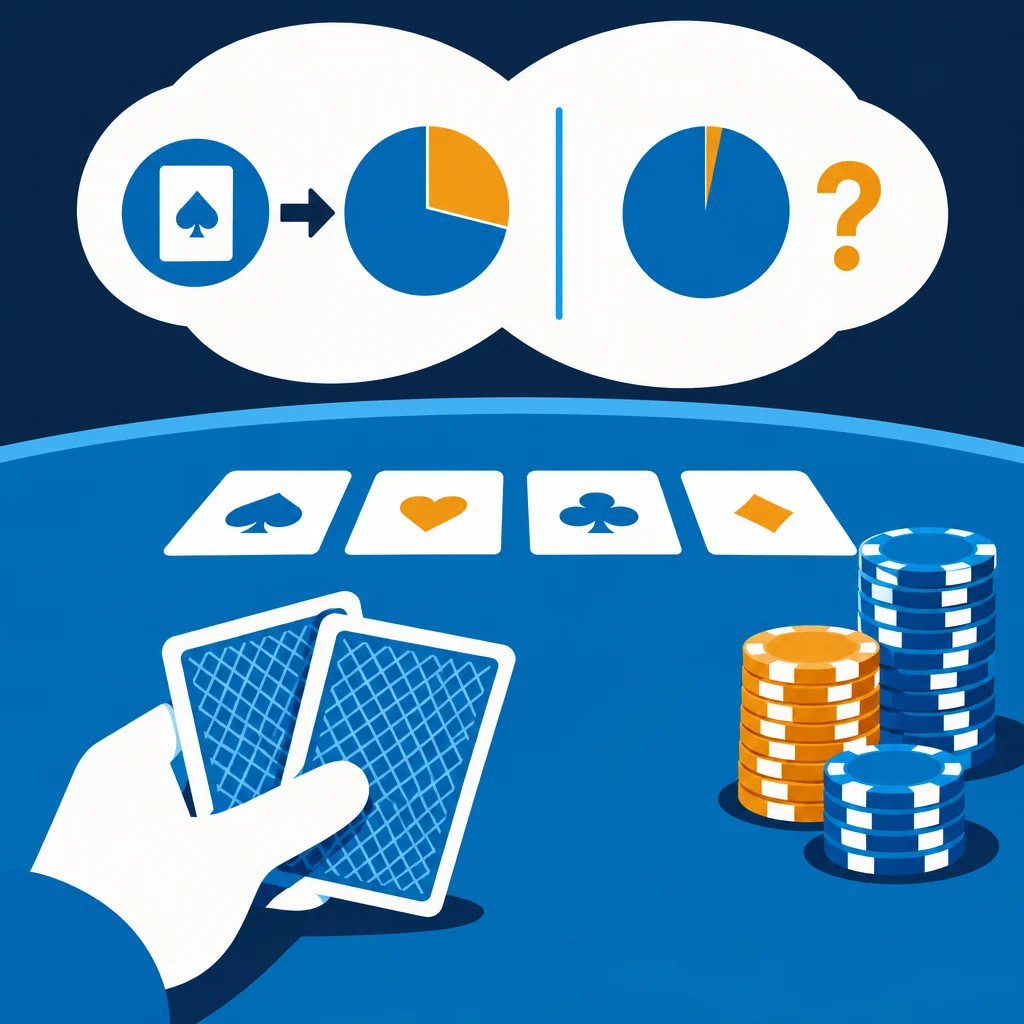
When a probability is only valid under a specific condition, treating it as unconditional leads to badly miscalculated risk at the table.

When a game pays out unevenly around its center, the expected value calculation looks identical but your real session experience is fundamentally different.

Raising your bet partway through a session changes your risk of ruin and expected loss in ways that compound beyond what most players anticipate.

Dividing a single large bet into multiple smaller bets changes your probability of ruin and your range of outcomes in ways that surprise most players.

Switching from a long-shot bet to a near-certain one feels safer, but the math shows exactly what you exchange and what you keep.

A gambling result only becomes meaningful evidence about a game's true odds once enough trials have accumulated, and that threshold is higher than most players expect.

In many gambling games the average result and the single most likely result are not the same number, and confusing them leads to badly calibrated expectations.

Whether past outcomes can influence future ones is not a matter of intuition but of game structure, and the distinction changes your math entirely.

Two games can share the same house edge yet cost you very different amounts per hour, and bet speed is the variable most players overlook.
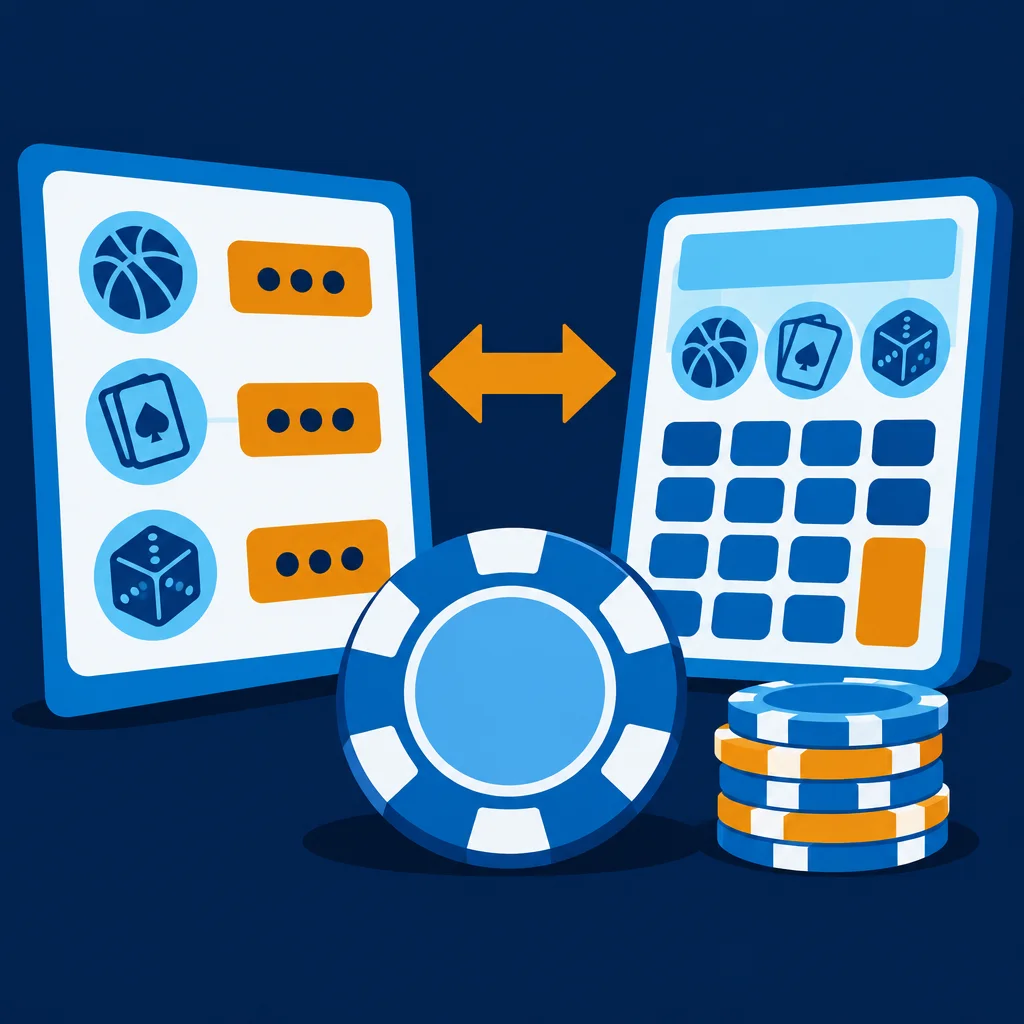
Gambling games display odds in one format while true probabilities exist in another, making that conversion the most useful calculation before betting.

Expected value tells you the average result over many bets, but the spread of outcomes around that average determines what you actually experience in any real session.

Winning individual bets and finishing a session ahead of where you started are two separate probabilities, and the gap between them grows with every hand you play.

When a bet pays a multiplier rather than a fixed return, the math of repeated play behaves differently than most players expect.

Playing the same bet repeatedly changes your overall probability of winning at least once, and that math is worth understanding.

The law of large numbers is real, but it only works in one direction, and misreading it leads to some of gambling's most costly mistakes.
Some gambling outcomes feel shocking because they are rare, but rarity and low probability are not the same thing, and the distinction changes how you interpret results.
A bet can be mathematically fair without being worth taking, and understanding why requires separating probability from expected value in one clear framework.
Some games let you modify your bet or payout after seeing partial information, and each modification creates a new expected value calculation worth doing.

When a bet or outcome depends on two separate events both occurring, the combined probability is almost always smaller than either individual probability alone.
When your bankroll is fixed but your playing time is flexible, variance behaves differently than most gamblers expect, and the math shows why.
Expected loss and actual loss are two different quantities, and understanding which one you control changes how you evaluate every session before it starts.

A loss limit only protects you when it is sized to the statistical spread of your specific game, not picked from thin air.
Odds and percentages describe the same mathematical reality in different formats, and converting between them correctly changes how you evaluate every bet you see.
The ratio between your single bet and your total bankroll determines your mathematical probability of going broke, independent of which game you choose.

When two bets offer different odds and different payouts, one calculation lets you compare them on equal footing before you commit a single dollar.

When two games share identical house edges, a second layer of math determines which one actually fits your bankroll, session length, and risk tolerance.

A single gambling opportunity behaves very differently from a repeated one, and understanding that gap changes how you should interpret any single outcome.

A probability tree converts a sequence of dependent gambling decisions into a visual map that shows the exact likelihood and value of every possible outcome.
Three specific inputs determine your true session cost, and working them out in advance reveals which games are actually expensive at your stake level.

A single session result, good or bad, carries far less information about a game's true odds than most players assume, and the math shows exactly why.
Swift Line Gaming gives curious players the context behind the numbers so every wager starts with better understanding. Published by Swift Line Gaming. About the journal